Know-how for cooking with vegan meat alternatives
09. February 2026

Why choose plant-based meat alternatives?
Plant-based meat alternatives are foods in which animal products are replaced by ingredients such as soya, wheat, peas or mushrooms. They're intended to replicate the taste, texture and versatility of meat as closely as possible.
Plant-based meat alternatives are no longer a rarity in modern kitchens.
There are many reasons for this. Some people want to enjoy the taste of meat without animals being harmed, or wish to reduce their environmental impact. Others are keen to discover new culinary experiences. Often, however, the main motivation is to cook in a more health-conscious way. Ingredients such as Kikkoman Soy Sauce are well suited to this, as this product is made entirely without artificial additives.
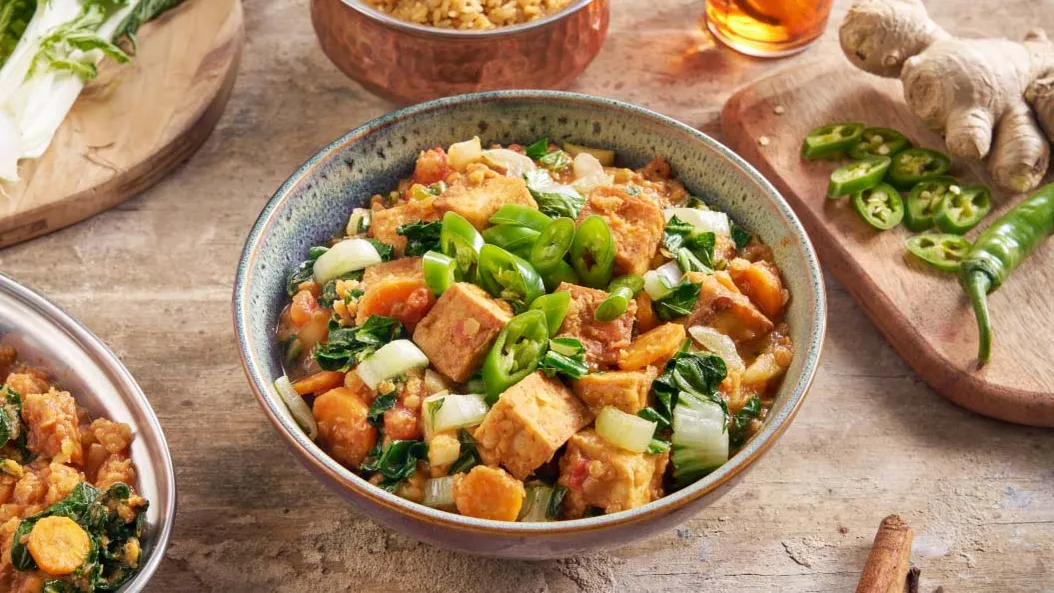
Almost all classic dishes can now be prepared using purely plant-based ingredients. Many products offer not only a convincing flavour, but also versatility—and, above all, an often surprisingly meat-like mouthfeel.

The benefits at a glance:
- Environment: lower CO₂ emissions, reduced water consumption and less land use
- Health: lower saturated fat, no cholesterol and often a high protein content
- Versatility: suitable for both vegan dishes and classic favourite recipes
- Ethics: more conscious consumption and no animal suffering
Soya-based alternatives such as tofu and tempeh
These are among the oldest and most versatile plant-based meat alternatives. Both are rich in protein, as soya contains all essential amino acids. They are therefore valuable building blocks of a balanced diet. Tofu and tempeh are also easy to prepare.
Expert tip:
When frying tofu and tempeh, use high heat—it ensures good browning and better texture.
Tofu:
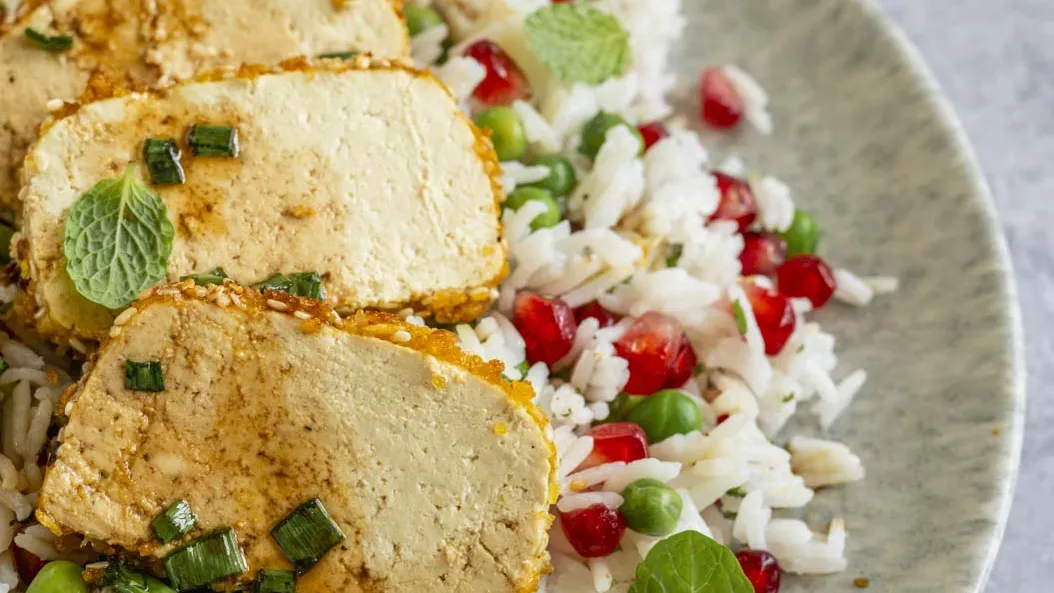
Tofu originally comes from China and has been eaten there for over 2,000 years. Its neutral flavour makes it an ideal base for marinades and seasonings that deliver savoury umami notes. At the same time, there are different varieties suited to different dishes:
- Natural tofu: perfect for marinating, grilling and frying
- Smoked tofu: more robust and savoury, ideal for pan-fried dishes and stews
- Silken tofu: soft and creamy due to its high water content, suitable for desserts, sauces and soups
Expert tip:
Press the tofu before frying. This allows it to absorb more flavour and results in a crisp texture.
Tempeh
Tempeh originates from Indonesia, specifically the island of Java, where it has been a staple for centuries. It has a distinctive nutty flavour and a firm bite. Because it holds up well during frying, tempeh is ideal for skewers and crisp pan-fried dishes. Thanks to the fermentation process used in its production, it is particularly easy to digest and rich in nutrients. As tempeh can sometimes taste slightly bitter, umami-rich marinades work especially well. For a simple preparation, fry plain tempeh until crisp and golden, then deglaze with Kikkoman Soy Sauce. It works well as a topping for salads, vegetables and soups, in burgers, or simply as a snack.
Expert tip:
Tempeh's flavour can be made milder by steaming or briefly blanching it.
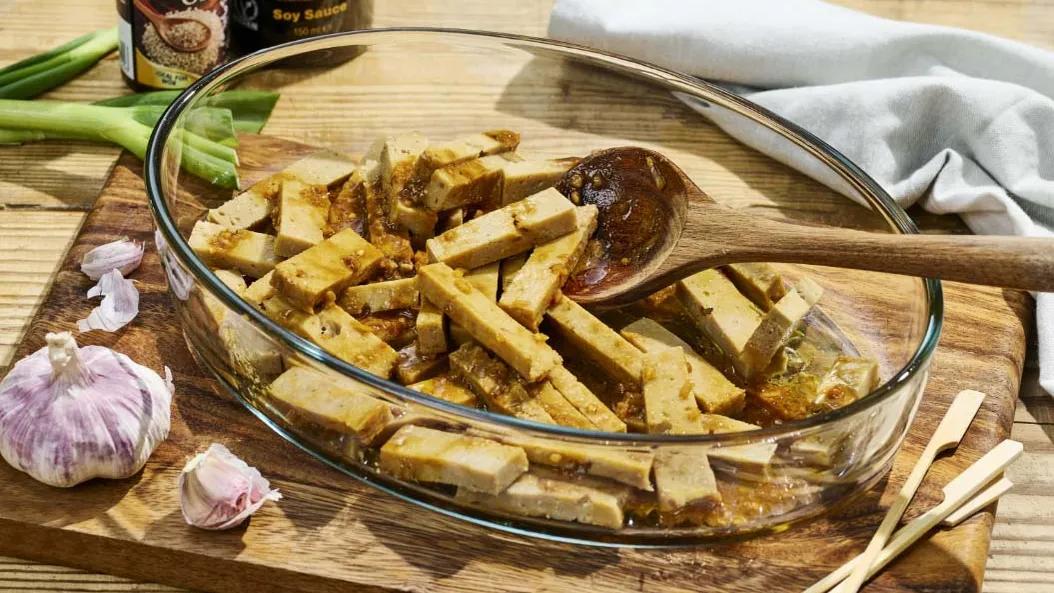
Don’t skimp on wheat: seitan—perfect for hearty dishes!
Made from wheat gluten, seitan is often considered the plant-based alternative that comes closest to meat, provided it is well marinated or seasoned. Thanks to its high protein content and firm texture, it resembles beef or poultry, especially in braised or pan-fried dishes, or when grilled.
The key advantage lies in the structure of wheat gluten. Kneading creates an elastic, fibrous network with a meat-like texture reminiscent of muscle fibres. This makes seitan ideal for hearty dishes such as roasts, gyros or goulash. For a rich, savoury umami taste, marinating with Kikkoman Soy Sauce is essential.
Expert tip:
Speaking of umami, seitan absorbs flavours exceptionally well. The longer it is marinated, the more intense the taste. When grilled or braised, it also holds its shape and develops appealing roasted notes.
Make seitan yourself or buy it ready-made?
Ultimately, this comes down to how much effort is involved. That said, the following applies:
It's worth making seitan yourself if you:
- want full control over seasoning, salt content and consistency
- need larger quantities, for meal prep, for example
- enjoy experimenting as a hobby cook
Ready-made seitan is ideal if you:
- have limited time for cooking
- are looking for perfectly seasoned products like seitan steaks
- want to try out different textures without much effort
Whether homemade or bought, seitan always provides a reliable base for a wide range of hearty dishes.
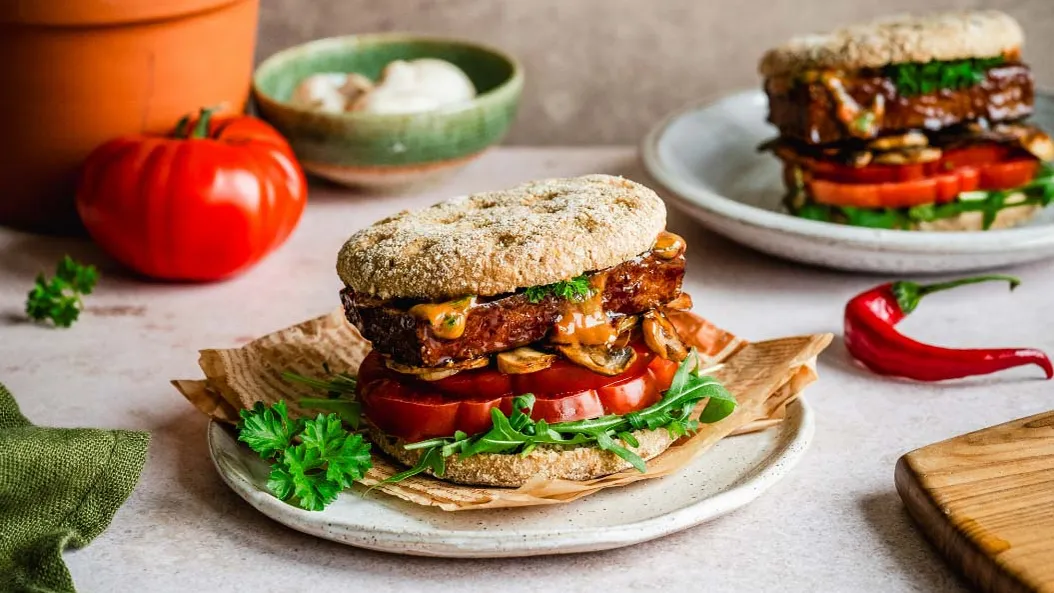
Plant-based burgers and sausages
Vegan burgers and sausages are nowadays often so well balanced that they are barely perceived as alternatives anymore. However, their base ingredients can vary greatly. Here’s which option works best for which purpose:
Vegan burgers:
- Pea protein patties: juicy texture, good browning, firm bite. Ideal for classic burgers
- Wheat protein patties: softer and slightly elastic; good for ‘meaty’ patties
- Vegetable or bean patties: less meat-like, but aromatic and high in fibre
Vegan sausages:
- Mild sausages based on soya or wheat are ideal for breakfast dishes
- Spicier variants such as vegan chorizo are particularly suitable for tacos or other Latin American and Spanish dishes, as well as pasta
- Varieties made with pea or wheat protein remain stable when heated and are therefore perfect for grilling
Expert tip:
Pay attention to the right temperature: fry patties over medium heat so they stay juicy inside. Many burger alternatives brown quickly and should not be heated for too long. Brush sausages lightly with oil before grilling to prevent them from splitting.
The right marinade creates umami
There are countless marinades using Kikkoman Soy Sauce, depending on your recipe. Here are three delicious and easy-to-prepare options that give your vegan meat substitute plenty of umami:
For tempeh: mix Kikkoman Soy Sauce and peanut oil in a 1:1 ratio.
For tofu: mix Kikkoman Soy Sauce with lemon juice and a little ginger.
For seitan: mix 4 tbsp Kikkoman Soy Sauce, 3 tbsp oil, 1 tbsp ground cumin, 1 tsp chopped garlic, 1 tsp chopped onion, 1 tbsp nutritional yeast, 1 tbsp rice vinegar and 1 tsp sesame oil.
Tempted to try vegan cooking?
Here are some delicious recipe ideas: