Southeast Asian cuisine: ingredients, dishes, techniques
17. September 2025
Which countries make up Southeast Asia?
Southeast Asia is not only a hotspot for backpackers—it’s also a culinary treasure trove for food lovers and professional chefs alike. As its name suggests, the region sits between South and East Asia and includes countries like Thailand, Vietnam, the Philippines, Laos, Indonesia, Malaysia, Myanmar and Cambodia.
Each country brings its own distinctive specialities and taste combinations to the table—from fiery stir-fries and aromatic soups to sweet and savoury stews. Exploring the diversity of Southeast Asian cuisine reveals an exciting range of dishes that go far beyond the usual pan-Asian fare.

Southeast Asia offers an explosion of flavours. Here, fresh coriander, fiery chillies, punchy lemongrass, aromatic ginger and creamy coconut milk combine to create an addictive harmony.
The hallmark of the region’s cuisine is the balance of hot, sweet, sour, salty and umami—often all in one bite. A simple dish can take on a whole new character with just a spoonful of fish sauce or a handful of fresh herbs. A dash of Kikkoman Soy Sauce adds that typical umami depth, making Southeast Asian cooking so dynamic and versatile.
And yet, each country seasons differently. In Vietnam, freshness dominates through an abundance of herbs and light broths; in Thailand, spiciness is the defining element; and in the Philippines, the food thrives on contrasts—sweet and salty, sour and spicy, creamy and crunchy.
Thailand, Vietnam and beyond: a country-by-country overview
Southeast Asia isn't one uniform culinary region but a mosaic of distinct food cultures. Each country has its own signature dishes, preferred ingredients and cooking methods—fermenting, steaming, grilling or wok-frying. Here’s a quick guide to help you understand the regional characteristics and incorporate them into your menu.
Thai food
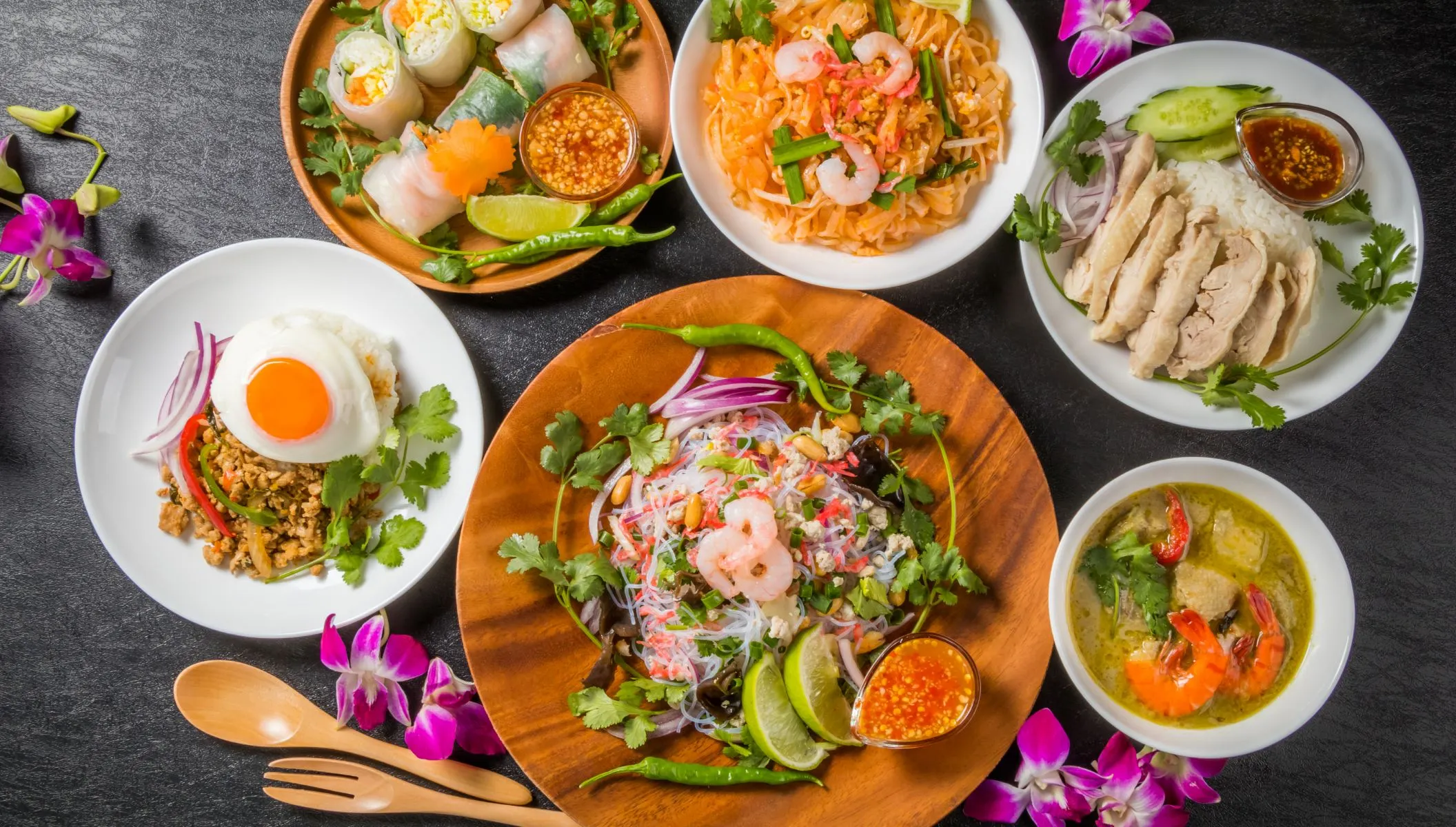
Thai cooking is renowned for its balance—hot, sweet, sour and salty elements are usually present in every dish. Classics like green curry, tom yam and pad thai are known around the world, but there’s much more to Thai cuisine than that.
In northern Thailand, savoury, fermented dishes dominate—like khao soi (a creamy curry noodle soup with chicken or beef, crispy noodles and pickled greens) or sai ua (a coarse, herb-packed sausage flavoured with lemongrass, galangal and curry paste). Further south, things get spicier and more seafood-based, with chillies, coconut milk and seafood taking centre stage. Dishes like gaeng tai pla (a fiery curry made with a paste of fermented fish offal) and gaeng som (a sour tamarind-based curry, often served with fish or prawns and vegetables such as papaya or pumpkin) are typical.
A big plus for professional kitchens: many Thai dishes, like curries and soups, are easy to prep in advance and finish just before serving—perfect for all sorts of à la carte concepts.
Typical ingredients:
- Lime leaves
- Galangal
- Palm sugar
- Fish sauce
- Fermented shrimp paste (kapi)
- Fresh coriander
Vietnamese food
Vietnamese food is light and fresh, with a strong focus on herbs and less heat, but plenty of aromatic depth—ideal for quick lunches or modern fusion dishes.
Pho is the best-known dish: a slow-cooked beef broth with rice noodles and fresh toppings. Summer rolls offer an exciting contrast of fresh fillings and punchy dips, such as Kikkoman Ponzu Lemon. Bánh mì blends French colonial influences with Asian notes—a crusty baguette filled with pork, pâté, pickled vegetables, chilli and herbs.
Here too, there's plenty of room for experimentation: many components can be prepped ahead and combined to order—ideal for quick, high-quality service.
Typical ingredients:
- Fish sauce (nuoc mam)
- Rice noodles
- Thai basil
- Coriander
- Mint
- Pickled carrots and radish
Indonesian food
Indonesia's cooking is rich and earthy, with an emphasis on spice blends, grilling techniques and fermentation. Indonesia’s thousands of islands are reflected in its culinary diversity.
Nasi goreng (fried rice with assorted vegetables and meat), satay skewers (grilled meat served with peanut sauce) and gado gado (a warm vegetable salad with creamy peanut dressing) are popular classics. Tempeh (made from fermented soybeans) also plays a key role in plant-based cuisine.
For the food service sector, it’s worth noting how strongly Indonesian cuisine has been shaped by Indian and Arab influences. These culinary connections are still evident in many dishes, creating flavour overlaps that lend themselves well to inventive fusion concepts.
Typical ingredients:
- Sambal (chilli paste in many varieties)
- Tempeh
- Coconut milk
- Makrut lime
- Tamarind
- Turmeric
- Coriander
- Cumin
Southeast Asia in food service

Southeast Asian cuisine offers plenty of scope for innovation in the catering industry: many recipes work equally well in smaller portions—as starters, snacks or sharing plates. Dips, pastes and fermented ingredients can be pre-prepared and bring bold, varied profiles to the plate. Here too, ingredients like Kikkoman Soy Sauce or Kikkoman Sesame Sauce can lend a distinctive note that sets a dish apart.
Combined with European techniques, this opens up exciting new crossovers—think classic steak tartare reimagined with a hint of chilli-infused fish sauce or fermented papaya.
Whether as a staple, a signature dish or a weekly special, Southeast Asian cuisine brings variety, freshness and a sense of discovery to any menu.
Southeast Asia: flavours that endure
Southeast Asian cuisine is more than just a trend—it offers opportunities for creative, flavour-packed cooking with real character and staying power in Western markets. It thrives on contrasts, freshness, depth and an almost limitless range of ingredients and flavour profiles.
For food professionals, this means: using Southeast Asian elements cleverly not only brings new taste experiences to your menu—it also creates authentic differentiation in today's competitive market.
So why not try lemongrass instead of rosemary? Or nuoc mam in place of classic stock? Who dares wins!